
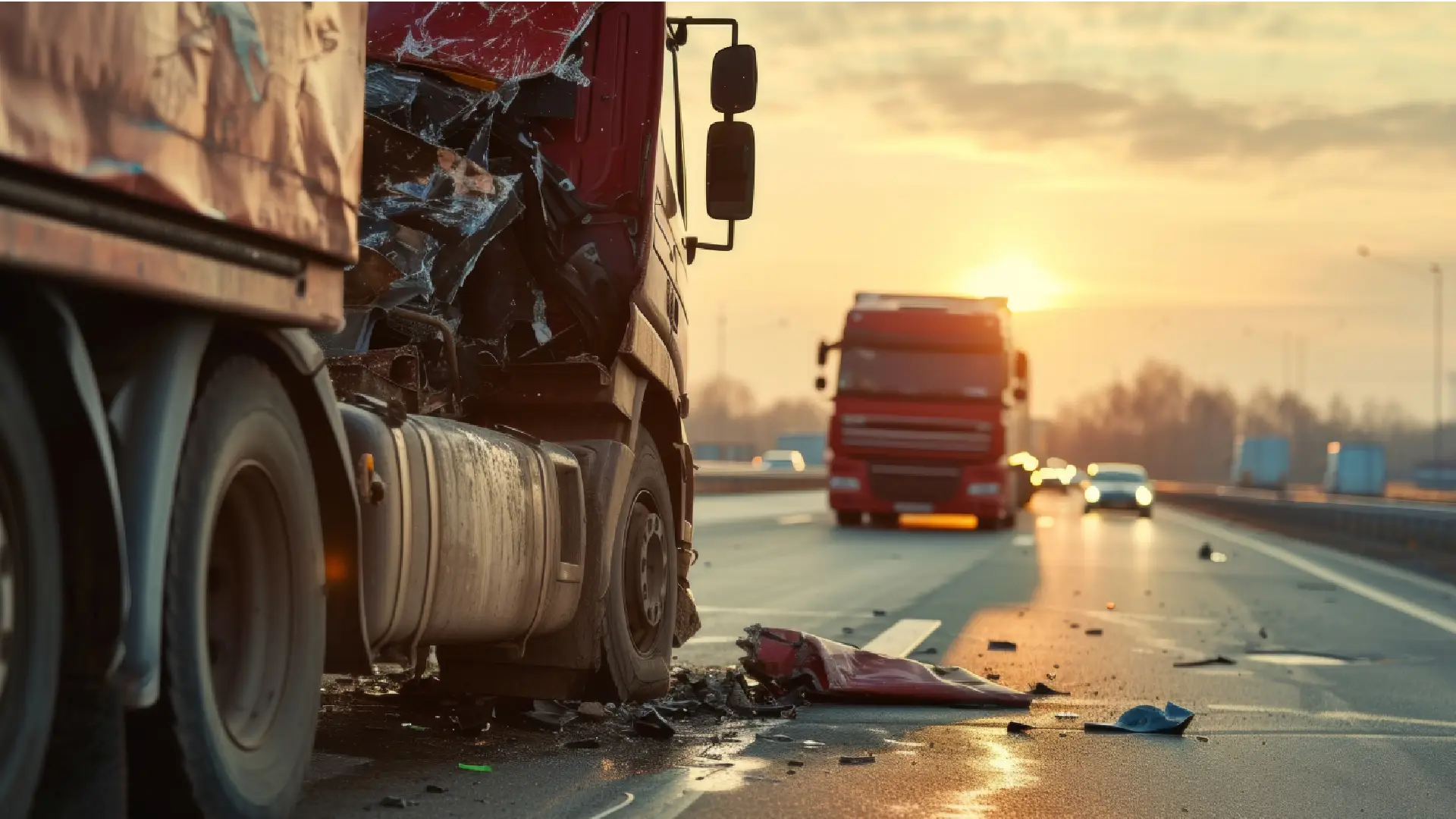
South Africa’s heavy commercial vehicle sector has faced another difficult period on the country’s major freight routes. During August 2026, a series of serious truck crashes, rollovers, fires and weather-related incidents once again highlighted the risks confronting fleet operators every day.
On 20 August, a diesel tanker crashed and caught fire on the N3 southbound near Peter Brown Drive outside Pietermaritzburg. The driver suffered severe burns, the highway was closed and emergency personnel had to navigate extensive congestion to reach the scene. Later in the month, further heavy-vehicle incidents were reported on major routes, including a fatal truck crash near Pongola and a tanker trailer rollover on the R59.
These incidents are individual events, and their causes should not be generalised before investigations are complete. Collectively, however, they reinforce a much larger challenge facing South African transport businesses: one serious heavy commercial vehicle accident can create financial consequences far beyond the damaged truck.
Vehicle repairs, recovery costs, third-party damage, lost operating days and disrupted customer deliveries can quickly turn a road accident into a significant business event. This makes effective fleet risk management and appropriate Heavy Commercial Vehicle Insurance essential considerations for transport operators.
Quick Answer
Truck accidents remain a significant risk for South African fleet operators, particularly on high-volume freight corridors such as the N3. N3 Toll Concession data indicates that human factors including fatigue, distraction, negligence and speeding are likely involved in more than 80% of crashes recorded on its 415 km route. Heavy Commercial Vehicle Insurance can help protect fleet operators against specified vehicle damage, liability and other insured losses, but the exact protection depends on the policy, driver compliance, vehicle use, security requirements and circumstances of the accident.
Why Truck Accident Risk Deserves Attention in 2026
South Africa depends heavily on road freight. Trucks move enormous volumes of imports, exports, retail products, agricultural goods, fuel, industrial equipment and raw materials between ports, warehouses, factories and neighbouring countries.
The N3 between KwaZulu-Natal and Gauteng provides a particularly clear example. According to N3 Toll Concession, trucks account for approximately 44% of all vehicles travelling on the N3 Toll Route each day.
That concentration of heavy vehicles means road safety incidents can have consequences far beyond the vehicles directly involved. A single overturned truck can close lanes, disrupt freight movements, delay other fleets and create significant recovery operations.
Fleet Risk Insight: A truck accident is rarely only a vehicle-repair problem. It can become a driver-safety, liability, cargo, downtime, recovery and business-continuity event simultaneously.
Human Factors Are Behind the Majority of N3 Crashes
One of the most important statistics for fleet managers comes from more than 26 years of incident information collected by N3 Toll Concession.
Its analysis indicates that human factors are the likely cause of more than 80% of crashes recorded along the 415 km N3 Toll Route between Cedara in KwaZulu-Natal and Heidelberg in Gauteng.
These factors include:
- Driver fatigue.
- Distraction.
- Negligence.
- Speeding.
- Poor decision-making.
- Slow reactions.
- Risk-taking behaviour.
For transport operators, this is significant because many of these risks can be influenced by fleet policy, driver management, training, scheduling and technology.
Driver Fatigue Remains a Major Fleet Risk
Long-distance trucking places substantial physical and mental demands on drivers. Extended hours on the road, night driving, irregular sleep, demanding delivery schedules and long periods away from home can all contribute to fatigue.
A tired driver may experience slower reaction times, reduced concentration and impaired judgement. In a heavy commercial vehicle travelling at highway speed, even a small reduction in reaction time can have serious consequences.
N3 Toll Concession also highlights the importance of truck-driver health and wellness. Medical conditions and other health factors can contribute to drowsiness, poor concentration and impaired decision-making if they are undetected or poorly managed.
Fleet Managers Should Watch for Fatigue Risk Factors
- Repeated overnight driving.
- Insufficient rest between shifts.
- Unrealistic delivery schedules.
- Long periods of monotonous highway driving.
- Drivers regularly reporting exhaustion.
- Excessive overtime or extended duty periods.
- Pressure to recover time following traffic or logistics delays.
- Drivers continuing despite feeling unwell or unable to concentrate.
Management Principle: A delivery deadline should never become an incentive for a fatigued driver to continue driving when it is no longer safe to do so.
Speed and Following Distance Matter More in a Heavy Vehicle
Heavy commercial vehicles cannot stop or change direction as quickly as passenger vehicles. Their size, weight and load characteristics mean drivers need substantially more space to respond safely when traffic conditions change.
Following too closely reduces that margin. Sudden congestion, roadworks, a stationary vehicle or another road user braking unexpectedly can leave a truck driver with insufficient distance to stop safely.
N3 Toll Concession’s current road-safety guidance specifically emphasises maintaining safe space around vehicles, avoiding aggressive driving and adapting speed to prevailing conditions.
Severe Weather Has Added Another Risk in 2026
August also demonstrated how quickly South African freight conditions can change. Snow, rain, icy surfaces, mist and poor visibility affected sections of the N3 during the month.
On 10 August, N3 Toll Concession warned road users about light snowfall, rain and mist across sections of the route, including areas around Balgowan, Nottingham Road, Van Reenen and Harrismith. Drivers were advised to reduce speed, increase following distances and avoid sudden braking or lane changes.
KwaZulu-Natal authorities subsequently intensified enforcement against abnormal-load vehicles operating during dangerous weather conditions. Abnormal-load trucks were intercepted and impounded, with authorities stating that these operations were prohibited under the severe conditions. Several trucks had reportedly already overturned along the N3.
| Weather Condition | Potential HCV Risk |
|---|---|
| Heavy rain | Reduced tyre grip, increased stopping distance and poorer visibility. |
| Mist | Reduced ability to identify stopped traffic and hazards ahead. |
| Snow or ice | Loss of traction and increased risk of skidding or jackknifing. |
| Strong winds | Greater stability risk, particularly for high-sided or lightly loaded vehicles. |
| Standing water | Increased risk of aquaplaning and loss of steering control. |
For fleet operators, severe weather should therefore trigger an operational decision—not simply a reminder to drivers to be careful.
Compliance Matters When Conditions Become Dangerous
The August enforcement action against abnormal-load vehicles provides an important lesson for commercial fleets. Where authorities restrict particular vehicle movements because conditions are unsafe, operators need to respond accordingly.
Continuing a journey despite applicable restrictions can expose the business to far more than the risk of a traffic fine. If an accident occurs, investigators and insurers may examine whether the vehicle was being operated legally, whether required permits and conditions were followed and whether reasonable precautions were taken.
This is why Heavy Commercial Vehicle Insurance and fleet compliance must work together. Insurance should protect a properly managed transport operation against defined risks; it should never be viewed as a substitute for safe and lawful fleet management.
What Does One Truck Accident Really Cost a Fleet?
The visible damage to the vehicle is often only the beginning. A serious HCV accident can generate multiple costs at the same time, some potentially insured and others falling directly to the business.
| Potential Cost | Impact on the Fleet |
|---|---|
| Truck repairs or replacement | A major accident can remove a high-value commercial asset from service. |
| Towing and recovery | Heavy-vehicle recovery can require specialist equipment and substantial resources. |
| Third-party vehicle damage | Other cars, trucks or commercial vehicles may be involved. |
| Property or infrastructure damage | Barriers, buildings, road infrastructure or other property may be damaged. |
| Fleet downtime | The truck cannot generate normal transport revenue while unavailable. |
| Replacement vehicle costs | Another vehicle may need to be hired or reassigned. |
| Customer disruption | Loads may need to be recovered, transferred or delivered by alternative arrangements. |
| Cargo exposure | Goods carried by the vehicle may also be damaged, lost or delayed. |
Understanding which of these exposures are covered by the fleet’s insurance programme—and which are not—is critical. A business may have comprehensive HCV Insurance but still face uninsured downtime, contractual losses or other indirect costs following an accident.
The real cost of a truck accident is not always the repair invoice. For a transport business, the larger financial impact may come from everything that happens while the vehicle is no longer earning revenue.
Fleet Downtime: The Cost That Continues After the Accident
Once an accident scene has been cleared and the damaged truck has been recovered, the financial impact on a transport operator may only be beginning. A heavy commercial vehicle that is standing in a repair facility is an asset that is no longer generating its normal transport revenue.
Depending on the severity of the accident, downtime may last days, weeks or considerably longer. Parts availability, specialist repairs, assessment processes and the extent of structural or mechanical damage can all influence how quickly a vehicle returns to service.
During that period, many of the fleet’s normal expenses may continue. Vehicle finance commitments, salaries, insurance premiums, administrative costs and other overheads do not necessarily stop simply because the truck cannot operate.
The Downtime Calculation Fleet Operators Often Miss
Consider a truck that normally generates R12,000 in revenue per operating day. If an accident removes it from service for 20 working days, the potential revenue affected by that downtime could reach R240,000 before considering replacement transport, customer penalties or other costs.
This is a simplified illustration rather than a calculation of actual financial loss, but it demonstrates why fleet managers should evaluate accident exposure in terms of business interruption as well as vehicle damage.
Fleet Management Insight: Knowing the replacement value of every truck is important. Knowing what each truck contributes to the business every day can be equally important.
Does HCV Insurance Cover Fleet Downtime?
Fleet operators should not automatically assume that comprehensive Heavy Commercial Vehicle Insurance will reimburse every financial consequence arising from a truck being off the road.
A policy may cover specified physical loss or damage to the insured vehicle, subject to its terms and conditions, while loss of revenue, replacement-vehicle expenses or other consequential financial losses may require additional or specifically arranged cover.
The correct question is therefore not simply, “Is my truck comprehensively insured?” It is also: “What happens to my business income and operating costs if this truck cannot work for several weeks?”
Third-Party Liability Can Turn a Crash Into a Major Financial Event
A heavy commercial vehicle accident may involve much more than damage to the insured truck. Other vehicles, buildings, roadside structures and public infrastructure can potentially be affected.
The scale of a heavy vehicle means the potential severity of third-party damage can be substantial. A collision involving several vehicles, for example, creates a very different liability exposure from a minor single-vehicle incident.
Fleet operators should therefore understand the third-party liability protection provided by their HCV Insurance, including applicable limits and exclusions. The amount of liability cover appropriate for a small delivery vehicle may not necessarily reflect the exposure created by a large truck, tanker or specialised commercial vehicle.
Road and Infrastructure Damage Can Add to the Exposure
Heavy vehicle accidents can also damage barriers, signage, bridges, road surfaces, traffic infrastructure and other property. Tankers or vehicles carrying hazardous substances can create even more complex recovery and clean-up requirements.
Operators of specialised vehicles should discuss these exposures with their insurance adviser rather than assuming every potential liability automatically falls within a standard policy.
What Does HCV Insurance Cover After a Truck Accident?
The exact protection depends on the policy selected, but Heavy Commercial Vehicle Insurance can be structured to protect commercial vehicles against specified risks associated with operating on South African roads.
Depending on the cover arranged, this may include protection relating to accidental damage, theft, fire and third-party liability. Additional options or extensions may also be available depending on the insurer and the particular transport operation.
| Potential HCV Exposure | Insurance Consideration |
|---|---|
| Accidental damage to the truck | May fall within comprehensive cover, subject to policy terms. |
| Truck stolen or hijacked | May be covered where theft or hijacking protection applies and policy conditions are met. |
| Fire damage | Potential cover depends on the policy and cause of loss. |
| Damage to another vehicle | Third-party liability cover may respond, subject to applicable terms and limits. |
| Damage to third-party property | Liability protection may apply depending on the circumstances and policy wording. |
| Lost operating revenue | Should not automatically be assumed to form part of standard comprehensive vehicle cover. |
| Cargo damaged in the accident | The goods may require separate Goods in Transit Insurance rather than relying on HCV cover. |
This last distinction is particularly important. HCV Insurance protects the vehicle-related risk, while Goods in Transit Insurance is designed around the cargo exposure. A transport business may therefore require both forms of protection.
Comprehensive HCV Insurance vs Third-Party Cover
Not every commercial vehicle insurance policy provides the same level of protection. One of the most important distinctions is between comprehensive insurance and more limited third-party protection.
Comprehensive HCV Insurance
Comprehensive cover generally provides broader protection for the insured commercial vehicle as well as applicable third-party liability, subject to the policy wording, exclusions and conditions.
Third-Party Cover
Third-party cover is more limited and is primarily intended to address liability for damage caused to another party’s property. It does not provide the same protection for damage to the operator’s own truck.
For an older truck with a relatively low market value, an operator may consider limited cover appropriate. For a financed or high-value commercial vehicle that is critical to revenue generation, the financial implications of losing the vehicle need to be considered carefully.
Insurance Decision: The cheapest premium is not necessarily the lowest-cost option when a serious accident occurs. The appropriate comparison is between the premium saved and the financial exposure retained by the business.
Driver Compliance Can Affect an HCV Insurance Claim
South African fleet operators should pay particular attention to driver compliance. The person behind the wheel is not simply an operational consideration; driver eligibility can also become relevant when an insurance claim is assessed.
Commercial drivers should hold the appropriate licence and Professional Driving Permit where required, and operators should have processes for confirming that these documents remain valid.
This issue was again placed in the spotlight during a KwaZulu-Natal enforcement operation in late August 2026, when authorities reported arrests involving undocumented foreign-national truck drivers and the suspension of dozens of vehicle licences. The enforcement action highlights the importance of verifying drivers and vehicles before they are dispatched.
Fleet Compliance Checks Should Include:
- Correct driver’s licence category.
- Valid Professional Driving Permit where required.
- Driver identity and employment documentation.
- Vehicle licence validity.
- Roadworthy status where applicable.
- Required permits for specialised or abnormal loads.
- Compliance with vehicle and load restrictions.
- Any driver conditions contained in the HCV Insurance policy.
Fleet managers should also avoid assuming that a document remains valid simply because a copy exists in a personnel file. Expiry dates and licence status should form part of an active compliance process.
Can an Invalid Licence Affect an Insurance Claim?
Potentially, yes, depending on the policy wording and circumstances. Commercial vehicle policies may contain requirements relating to authorised and appropriately licensed drivers.
That does not mean every licensing irregularity automatically produces the same claim outcome. The insurer will consider the applicable policy terms and facts surrounding the loss. However, fleet operators should not knowingly expose themselves to the uncertainty.
Compliance Principle: Driver and vehicle compliance should be checked before the truck leaves the depot—not after an accident when the insurer requests the documentation.
Vehicle Maintenance Is Part of Accident Prevention
Human behaviour may account for a large proportion of crashes, but vehicle condition remains another important area of fleet risk management. Heavy commercial vehicles operate under demanding conditions, often covering substantial distances while carrying significant loads.
Tyres, brakes, steering, suspension, lights and other safety-critical components need systematic inspection and maintenance. A defect that might appear relatively minor in a depot can become extremely serious when a fully loaded truck is travelling at highway speed.
A Strong Preventative Maintenance Programme Should Include:
- Documented pre-trip inspections.
- Regular tyre-condition and pressure checks.
- Brake inspections and maintenance.
- Steering and suspension checks.
- Trailer coupling and connection inspections.
- Lighting and visibility checks.
- Monitoring of recurring mechanical faults.
- Scheduled preventative servicing.
- Clear procedures for removing unsafe vehicles from service.
Maintenance records can also become important after an accident. They help demonstrate how the vehicle was being managed before the incident and provide valuable information when determining whether a mechanical failure contributed to the loss.
How Telematics Can Help Reduce Heavy Vehicle Accident Risk
Modern fleet technology gives transport operators far greater visibility into what happens between the depot and the delivery point. GPS tracking and vehicle telematics can help identify patterns of risky driving before those behaviours contribute to a serious accident.
Depending on the system installed, fleet managers may be able to monitor speeding, harsh braking, rapid acceleration, excessive idling, route deviations and other driver events. The value lies not simply in collecting the data, but in using it to improve driver behaviour.
If the same driver repeatedly generates speeding or harsh-braking events, for example, the fleet has an opportunity to investigate and intervene. Coaching, additional training or changes to scheduling may address the risk before it results in a collision.
Fleet Data Can Help Identify:
- Repeated speeding events.
- Harsh braking and acceleration.
- Unusual driving hours.
- Extended journeys without appropriate stops.
- Route deviations.
- Recurring risky behaviour by individual drivers.
- Vehicles consistently operating under unusually demanding conditions.
Fleet Technology Insight: Telematics is most valuable when it changes behaviour. A dashboard full of driver alerts achieves little if recurring risks are never investigated or addressed.
Dashcams Can Provide Valuable Accident Evidence
Dashcams and vehicle camera systems are becoming increasingly useful tools in commercial fleet risk management. When an accident occurs, video footage may provide an objective record of the moments immediately before and during the incident.
This can be particularly valuable where drivers and third parties provide conflicting versions of events. Depending on the camera system, footage may help establish traffic conditions, vehicle positioning, road conditions and the actions of other road users.
Some advanced systems can also assist fleets with proactive risk management by detecting behaviours or conditions such as driver distraction, fatigue indicators, unsafe following distances or lane-related events.
Camera footage does not replace proper accident investigation, but it can provide valuable supporting evidence when insurers, fleet managers and other parties need to understand what happened.
What Should a Driver Do Immediately After a Truck Accident?
A serious accident can be chaotic, and the safety of drivers, passengers and other road users must always come first. Fleet operators should nevertheless have a documented accident procedure so that drivers know what to do once immediate safety and emergency requirements have been addressed.
HCV Accident Checklist
- Stop safely and assess whether anyone requires emergency medical assistance.
- Contact the appropriate emergency services where necessary.
- Notify the fleet controller or designated company contact immediately.
- Follow legal requirements relating to reporting the accident.
- Do not admit liability at the scene.
- Record the details of other vehicles and parties involved.
- Obtain contact details for witnesses where possible.
- Photograph the vehicles, road conditions, damage and surrounding scene where it is safe to do so.
- Preserve dashcam or onboard-camera footage.
- Retain vehicle tracking and telematics records.
- Record police or incident reference details where applicable.
- Contact the insurer or broker according to the policy’s claims procedure.
Operators transporting cargo should also document the condition of the load. Damage to the truck and damage to the goods may involve different insurance policies and claims processes.
Evidence Matters When an HCV Claim Is Assessed
Following an accident, an insurer may need to establish how the incident occurred, who was driving, whether the vehicle was being operated appropriately and the extent of the damage.
Good fleet records can make this process considerably easier. Instead of trying to reconstruct events several days later, the operator can provide contemporaneous information from the vehicle, driver and accident scene.
| Useful Accident Evidence | Why It Matters |
|---|---|
| Driver details and licence documentation | Confirms who was operating the vehicle and relevant licensing information. |
| Photographs of the scene | Records vehicle positions, road conditions and visible damage. |
| Dashcam footage | May provide an objective visual record of the incident. |
| Telematics information | May assist in establishing vehicle location, speed and driving events. |
| Maintenance records | Provide information about the vehicle’s condition and servicing history. |
| Witness information | Can assist where circumstances are disputed. |
| Police or incident report | Provides an official record where applicable. |
| Cargo documentation | Helps identify goods affected by the accident and their value. |
The Driver’s Account Should Be Recorded While Events Are Fresh
Where the driver is medically able to do so, the fleet should obtain a factual account of the incident as soon as reasonably practical. Memories can become less precise over time, particularly after a stressful event.
The report should focus on facts rather than speculation: where the vehicle was travelling, prevailing weather and road conditions, what the driver observed, what happened immediately before the collision and what actions were taken afterwards.
Telematics, dashcam footage and other available evidence can then be considered alongside the driver’s account.
Accident Investigation Should Be About Prevention, Not Only Blame
Once the immediate insurance and operational requirements have been addressed, fleet managers should examine what can be learned from the incident.
Even where another road user was primarily responsible, an accident may reveal opportunities to improve fleet procedures. Where the company’s own driver contributed to the incident, identifying the underlying reason is more useful than simply recording that the driver made a mistake.
Questions Worth Asking After Every Serious Accident
- Was fatigue potentially a factor?
- Was the vehicle travelling at an appropriate speed for the conditions?
- Was adequate following distance maintained?
- Did weather or visibility contribute?
- Was the journey schedule realistic?
- Was the vehicle mechanically fit for the trip?
- Were any telematics warnings generated before the accident?
- Had similar driver behaviour been identified previously?
- Could a fleet procedure have reduced the severity of the incident?
- Does driver training need to be updated?
Risk Management Principle: Every serious accident should produce more than an insurance claim. It should produce information that helps reduce the probability of the next one.
How Fleet Managers Can Reduce HCV Accident Exposure
No transport operator can eliminate road risk entirely. Trucks share South African roads with thousands of other vehicles, changing weather, roadworks, congestion and unpredictable conditions.
Fleet managers can, however, control many of the factors within their own operations.
- Recruit appropriately qualified and experienced drivers.
- Verify licences and Professional Driving Permits regularly.
- Implement realistic driving and delivery schedules.
- Actively manage driver fatigue.
- Use telematics data to identify recurring risky behaviour.
- Provide ongoing defensive-driving and safety training.
- Maintain vehicles according to a documented preventative maintenance programme.
- Use pre-trip inspections to identify safety-critical defects.
- Adjust or suspend journeys when severe weather makes conditions unsafe.
- Maintain clear accident and emergency-response procedures.
- Review serious incidents and near misses for recurring patterns.
- Keep accurate maintenance, driver and compliance records.
Near Misses Should Not Be Ignored
A fleet does not need to wait for a truck to crash before identifying a dangerous trend. Harsh-braking events, repeated speeding, fatigue alerts and driver-reported near misses can provide early warnings.
These events have an important advantage from a risk-management perspective: the business has an opportunity to intervene before a major financial loss occurs.
Fleet operators should therefore consider reviewing incident and telematics data regularly rather than only after an accident. Patterns across individual drivers, vehicles, routes or times of day may reveal risks that are difficult to identify when incidents are considered individually.
Your HCV Insurance Should Change as Your Fleet Changes
A transport operation rarely remains static. Fleets grow, vehicle values change, new routes are added and different types of work are undertaken. Insurance arrangements established several years ago may therefore no longer accurately reflect the current business.
Fleet operators should review their HCV Insurance when they purchase additional trucks, add specialised vehicles, enter new territories, change the nature of their operations or significantly alter vehicle values.
The same applies when claims experience begins to change. A pattern of accidents may indicate that the fleet’s operational risk needs attention as well as its insurance programme.
Questions to Ask at Your Next HCV Insurance Review
- Are our current vehicle values accurate?
- Are all trucks, trailers and specialised vehicles correctly listed?
- Are our third-party liability limits appropriate?
- What towing and recovery provisions apply?
- What driver conditions must we comply with?
- How does the policy deal with cross-border operations?
- Are there restrictions relating to vehicle use or particular loads?
- What happens financially when a truck is off the road?
- Do we require separate Goods in Transit Insurance for cargo?
- Are there important exclusions or excesses the fleet management team should understand?
A serious accident is the wrong time to discover that the fleet and its insurance programme have evolved in different directions.
Key Takeaways for South African Fleet Operators
- Truck accidents remain a significant operational and financial risk for South African transport businesses.
- Human factors such as fatigue, distraction, speeding and poor decision-making remain major contributors to road crashes.
- Severe weather should trigger active fleet-management decisions, including delaying or suspending journeys where conditions are unsafe.
- Driver licensing, Professional Driving Permits and vehicle compliance should be verified continuously rather than only after an incident.
- Preventative maintenance is an important part of both road safety and effective fleet risk management.
- Telematics and dashcams can help fleets identify risky behaviour and provide valuable evidence following an accident.
- The financial consequences of an accident can extend far beyond repairing the truck and may include towing, recovery, third-party liability, downtime and disrupted customer deliveries.
- Comprehensive HCV Insurance should not automatically be assumed to cover every financial consequence of a truck being off the road.
- Cargo carried by the truck may require separate Goods in Transit Insurance.
- HCV Insurance should be reviewed as vehicle values, routes, fleet size and operating conditions change.
Frequently Asked Questions About Truck Accidents and HCV Insurance
Cover depends on the individual Heavy Commercial Vehicle Insurance policy. Comprehensive HCV Insurance may provide protection for accidental damage to the insured truck as well as applicable third-party liability, subject to policy terms, limits, excesses, conditions and exclusions. Additional protection may need to be arranged for exposures not included in the standard policy.
Fleet operators should not assume that standard comprehensive HCV Insurance automatically covers lost revenue while a truck is being repaired. Loss of income, replacement-vehicle expenses and other consequential losses may require specific additional cover. The policy wording should be checked carefully.
The outcome of any claim depends on the facts of the accident and the policy wording. Fleet operators should nevertheless actively manage driver fatigue and comply with applicable driver, safety and policy requirements. Fatigue is an important road-safety risk for long-distance commercial fleets.
It may, depending on the circumstances and policy conditions. HCV policies can contain requirements relating to authorised and appropriately licensed drivers. Fleet operators should verify the correct driver’s licence and Professional Driving Permit where required before a driver operates the vehicle.
HCV Insurance and cargo insurance serve different purposes. The truck may be insured under a Heavy Commercial Vehicle policy while the goods it carries require separate Goods in Transit Insurance. Transport operators should make sure both vehicle and cargo exposures are appropriately addressed.
The N3 is one of South Africa’s most important freight corridors and carries a substantial volume of heavy commercial traffic between KwaZulu-Natal and Gauteng. High traffic volumes, changing weather, long-distance driving and demanding freight schedules make effective driver and vehicle risk management particularly important.
Telematics can help fleet managers identify behaviours such as speeding, harsh braking, unusual driving hours and other risk indicators. Its effectiveness depends on fleets actively using the information for driver coaching, intervention and operational improvements.
Once immediate safety and emergency requirements have been addressed, useful evidence can include photographs, driver and witness details, licence information, police or incident references, dashcam footage, telematics records, maintenance information and details of any cargo affected. The insurer or broker should also be notified in accordance with the policy requirements.
Conclusion: One Accident Can Affect the Entire Fleet Business
The serious truck incidents reported on South African roads during August 2026 are a timely reminder of the risks faced by heavy commercial vehicle operators. Every journey combines multiple variables: the driver, vehicle condition, road environment, weather, traffic, cargo and the behaviour of other road users.
Fleet operators cannot control all of them. They can, however, control how effectively their own risks are managed.
Driver fatigue programmes, realistic scheduling, preventative maintenance, telematics, camera technology, compliance checks and proper accident procedures can all help reduce exposure. Just as importantly, every serious incident and near miss should be treated as an opportunity to identify weaknesses before another accident occurs.
Insurance forms the financial protection behind those preventative measures. The right Heavy Commercial Vehicle Insurance can help protect valuable fleet assets and address defined liabilities when an insured event occurs, but operators need to understand the limits and conditions of that protection.
A truck may be insured for millions of rand, but its real value to the business lies in what it does every day. When that vehicle stops moving because of an accident, the impact can spread through revenue, customers, cargo commitments and the wider fleet operation.
That is why HCV Insurance should never be considered in isolation. The strongest protection combines safe drivers, compliant vehicles, effective fleet management and insurance structured around the risks the business actually faces.
Protect Your Fleet with Specialist HCV Insurance
Whether you operate a single heavy commercial vehicle or manage a large South African transport fleet, an accident can create substantial financial exposure. Your insurance should reflect the value of your vehicles, the routes you travel, the work you perform and the liabilities your operation may face.
Speak to Cross-Cover Insurance Consultants about specialist Heavy Commercial Vehicle Insurance for South African transport and fleet operations.
Related Articles
- Heavy Commercial Vehicle Insurance in South Africa: What Fleet Owners Need to Know
- The Complete HCV & Fleet Insurance Guide
Disclaimer: This article is intended for general informational purposes only and does not constitute insurance, legal, road-safety or fleet-management advice. Heavy Commercial Vehicle Insurance policies differ between insurers and may contain specific limits, excesses, warranties, driver requirements, conditions and exclusions. Cover for vehicle damage, third-party liability, towing, recovery, downtime and other losses depends on the individual policy and circumstances of the incident. Fleet operators should review their policy documentation and obtain professional advice regarding their specific requirements.